Road signs
All Dutch road signs and what they mean
Every sign in the Dutch traffic code (RVV 1990, appendix 1), with its official code and a plain explanation. Signs are grouped A to L, the way the law groups them.
A Speed limits 5 signs
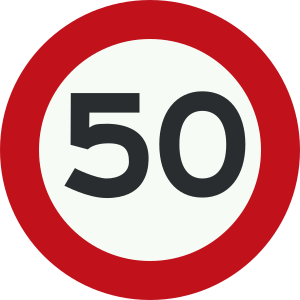 A1 Maximum speed The highest speed in km/h you may drive from this sign onwards.
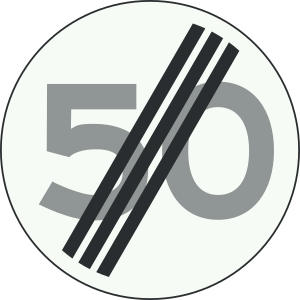 A2 End of maximum speed The speed limit shown on the sign stops here.
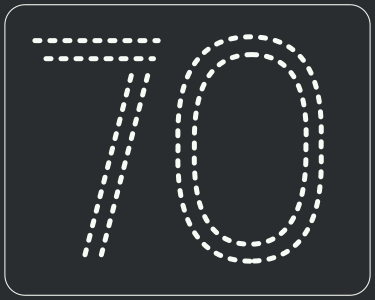 A3 Maximum speed on an electronic sign A speed limit shown on an electronic sign, usually above the lanes of a motorway.
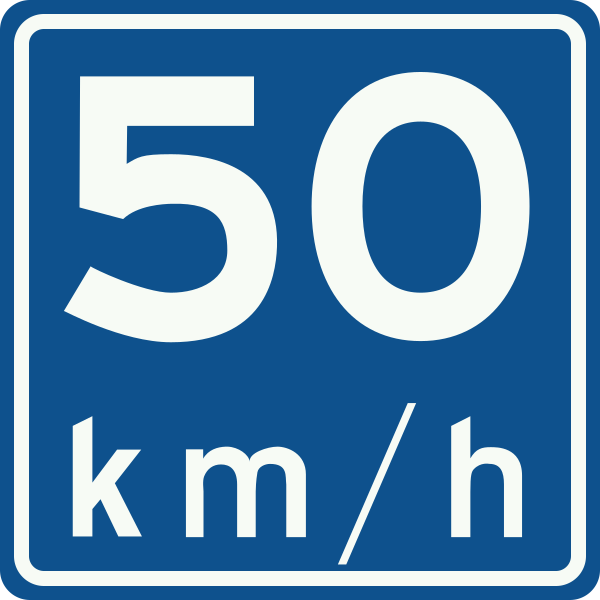 A4 Advisory speed The speed recommended for the stretch ahead, for example a sharp bend.
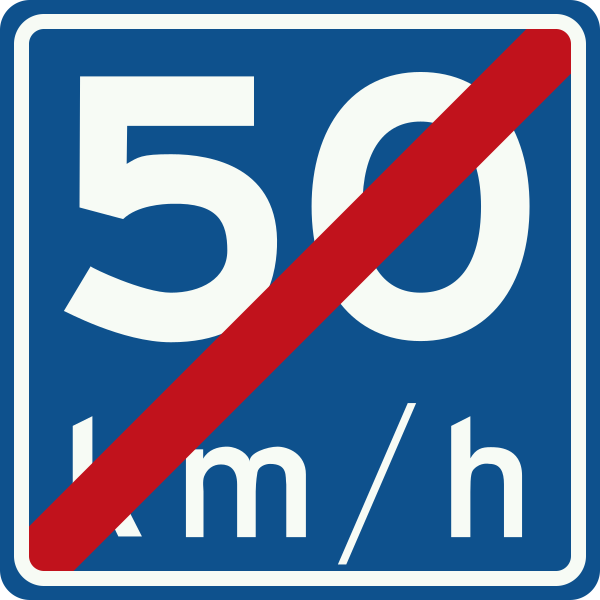 A5 End of advisory speed The advisory speed from the earlier sign ends here.
B Priority 7 signs
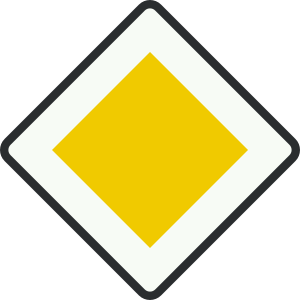 B1 Priority road At junctions along this road, traffic from the side roads must give way to you.
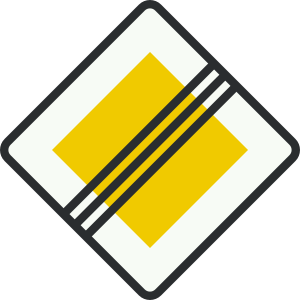 B2 End of priority road The priority road ends here.
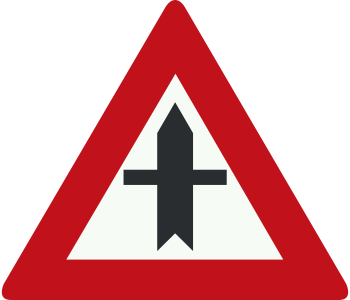 B3 Priority junction At the next junction you have priority over traffic from both side roads.
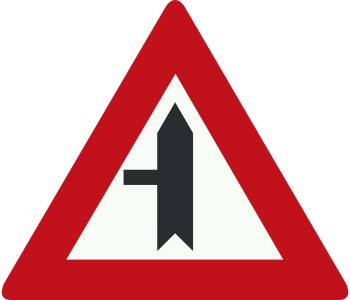 B4 Priority junction, side road to the left At the next junction you have priority over traffic from the side road on the left.
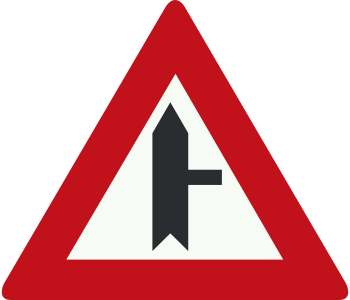 B5 Priority junction, side road to the right At the next junction you have priority over traffic from the side road on the right.
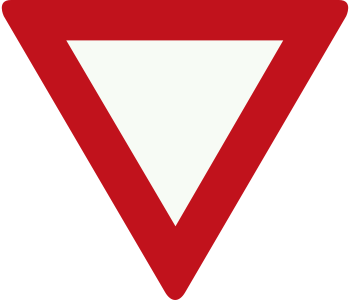 B6 Give way to drivers on the crossing road Give way to all traffic on the road you're joining, from both directions.
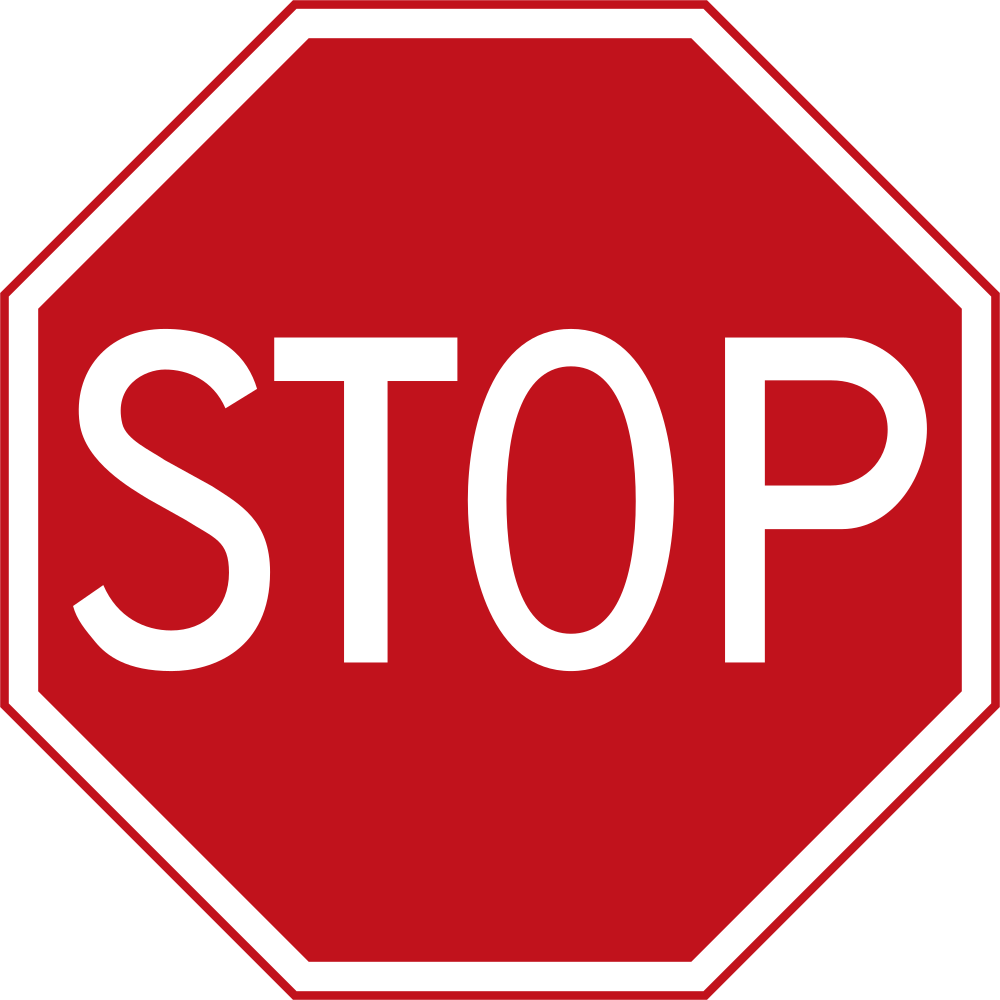 B7 Stop and give way to drivers on the crossing road Come to a full stop, then give way to drivers on the crossing road.
C Prohibitions 31 signs
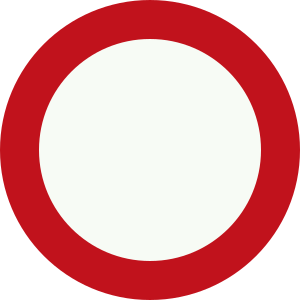 C1 Closed to vehicles in both directions No vehicles, riders or people leading animals may use this road, from either end.
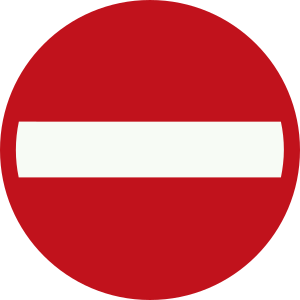 C2 One-way road, closed in this direction You may not drive into this road from this side, because it is one-way towards you.
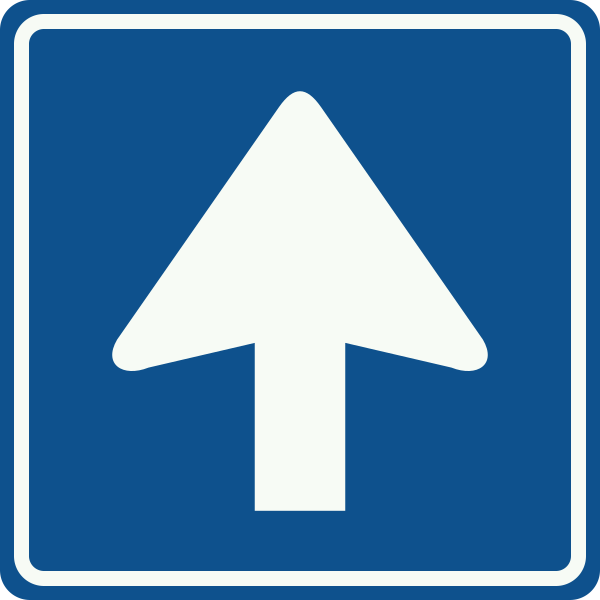 C3 One-way road, direction of travel You are on a one-way road: traffic may only go in the direction of the arrow.
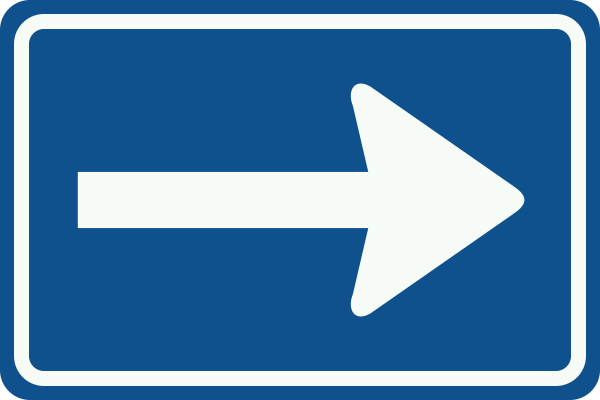 C4 One-way road The road you are turning into or crossing is one-way, in the direction of the arrow.
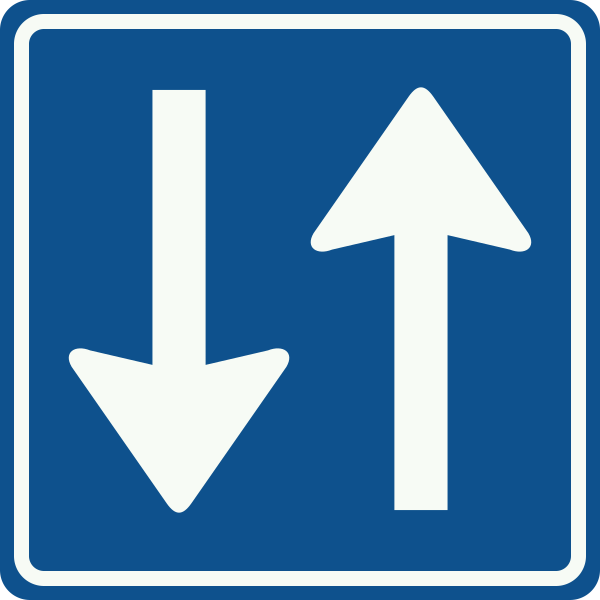 C5 Entry permitted You may drive into this road from here.
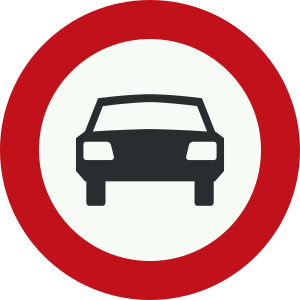 C6 Closed to motor vehicles on more than two wheels Cars, vans, trucks and other motor vehicles with more than two wheels may not enter.
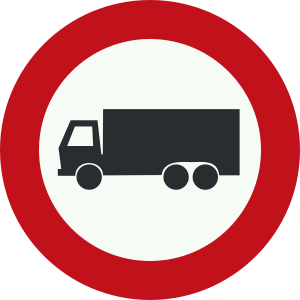 C7 Closed to trucks Trucks may not drive into this road.
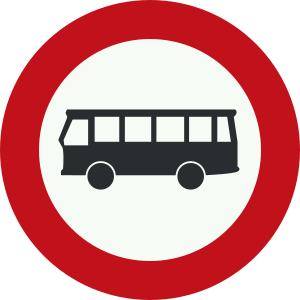 C7a Closed to buses Buses may not drive into this road.
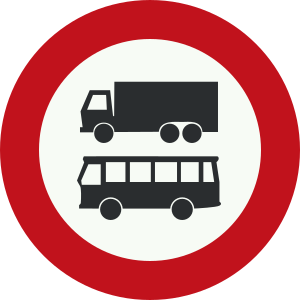 C7b Closed to buses and trucks Buses and trucks may not drive into this road.
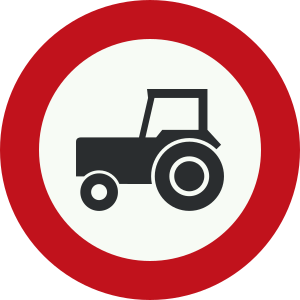 C8 Closed to tractors, slow motor vehicles and mobile machines Tractors, limited-speed motor vehicles and mobile machines may not enter this road.
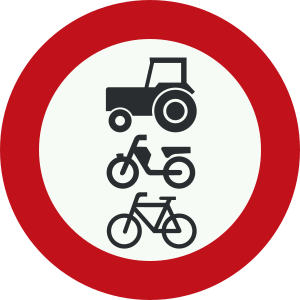 C9 Closed to riders, carts, tractors, slow vehicles, mopeds and cycles This road is closed to slow traffic: riders, cattle, carts, tractors and other slow motor vehicles, microcars, cycles, light mopeds, mopeds and disability vehicles.
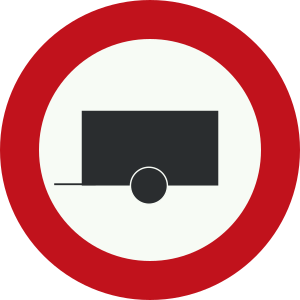 C10 Closed to motor vehicles with a trailer Motor vehicles pulling a trailer may not enter this road.
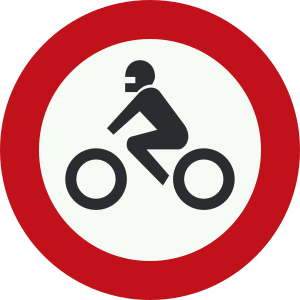 C11 Closed to motorcycles Motorcycles may not drive into this road.
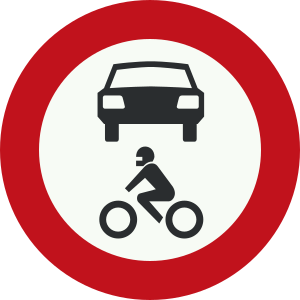 C12 Closed to all motor vehicles No motor vehicles may enter: no cars, vans, trucks or motorcycles.
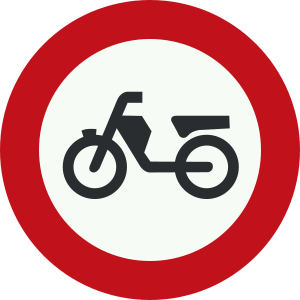 C13 Closed to mopeds, light mopeds and disability vehicles with the engine running Mopeds, light mopeds and motorised disability vehicles may not use this road or path with the engine running.
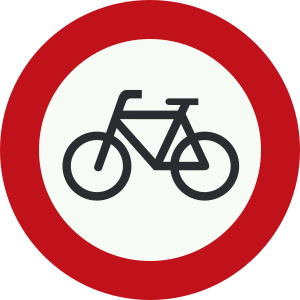 C14 Closed to bicycles and disability vehicles without an engine Bicycles and disability vehicles without an engine may not use this road.
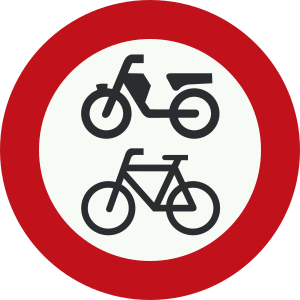 C15 Closed to bicycles, mopeds and disability vehicles Bicycles, mopeds and disability vehicles may not use this road.
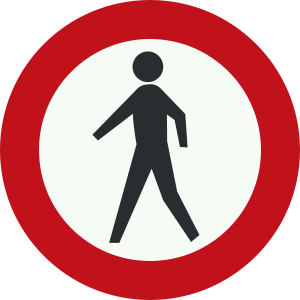 C16 Closed to pedestrians People on foot may not use this road or path.
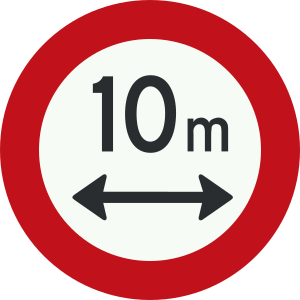 C17 Closed to vehicles longer than shown Vehicles longer than the length on the sign, load included, may not enter.
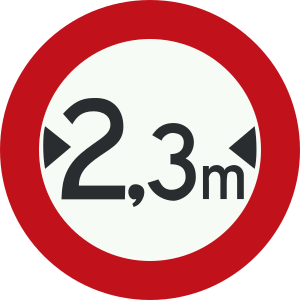 C18 Closed to vehicles wider than shown Vehicles wider than the width on the sign, load included, may not enter.
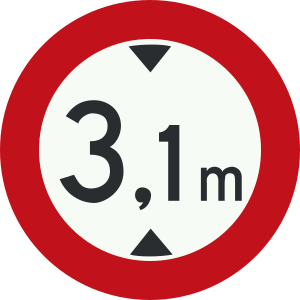 C19 Closed to vehicles higher than shown Vehicles taller than the height shown, load included, may not enter.
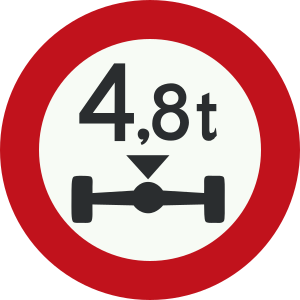 C20 Closed to vehicles with an axle load above the limit shown Vehicles with an axle load above the weight on the sign may not enter.
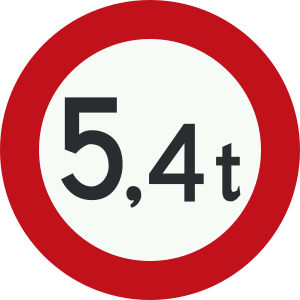 C21 Closed to vehicles heavier than shown Vehicles or combinations heavier than the mass shown may not enter.
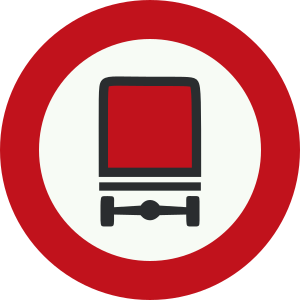 C22 Closed to vehicles carrying dangerous goods Vehicles carrying certain dangerous goods, shown by orange plates, may not enter.
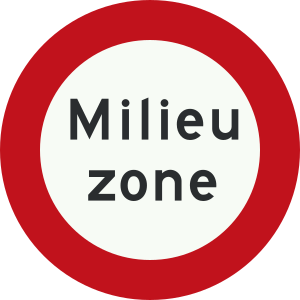 C22a Low-emission zone for diesel vehicles Start of a low-emission zone that diesel vehicles may only enter if they meet the emission class on the sub-sign.
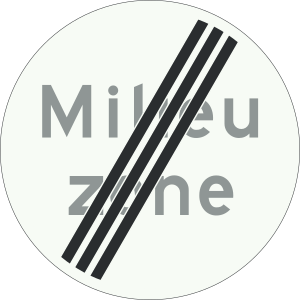 C22b End of low-emission zone The low-emission zone ends here.
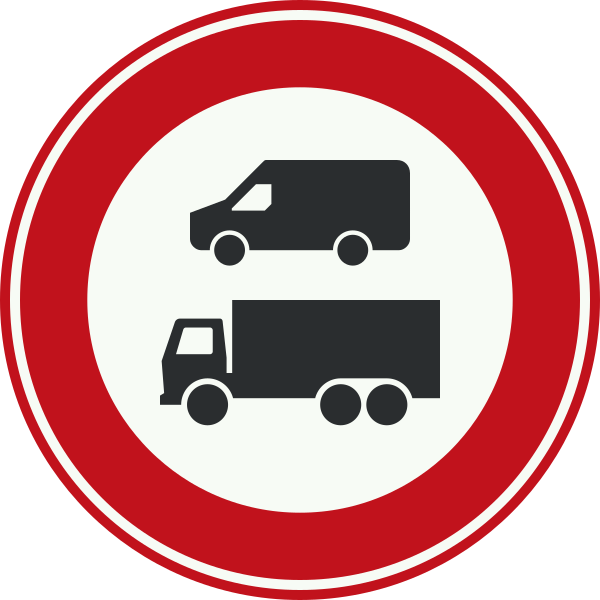 C22c Zero-emission zone for vans and trucks Start of a zero-emission zone, where vans and trucks may only drive if they produce no exhaust emissions.
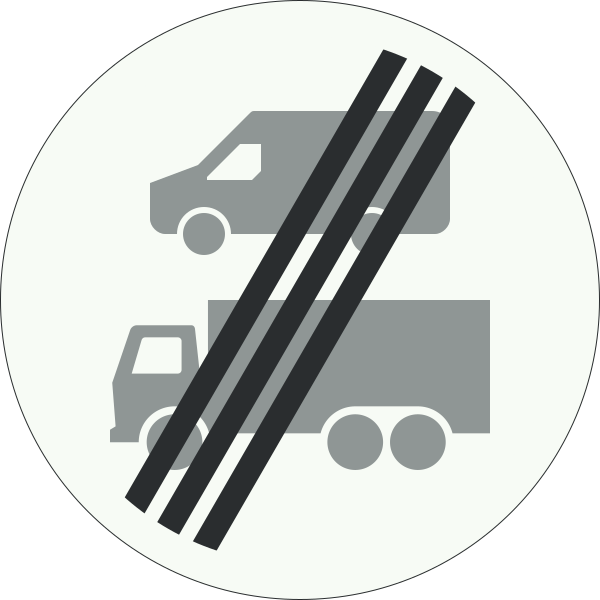 C22d End of zero-emission zone The zero-emission zone ends here.
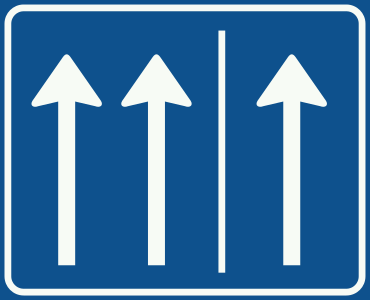 C23-01 Peak-hour lane open The peak-hour lane is open, so you may drive on it.
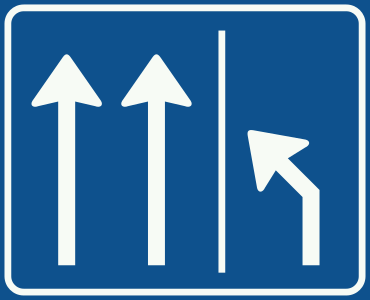 C23-02 Clear the peak-hour lane The peak-hour lane is closing, so move off it.
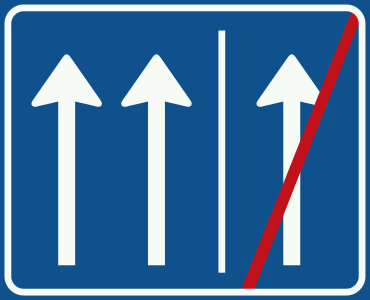 C23-03 End of peak-hour lane The peak-hour lane ends here.
D Direction 7 signs
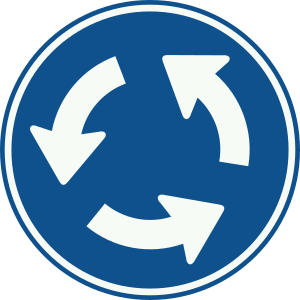 D1 Roundabout: follow the arrows You are at a roundabout: drive round it in the direction of the arrows.
 D2 Pass on the side the arrow shows Keep to the side of the island or obstacle that the arrow points to, usually the right.
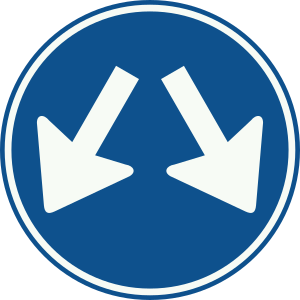 D3 Pass on either side You may pass this island or obstacle on the left or on the right.
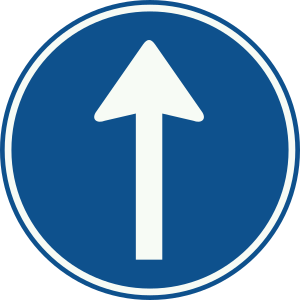 D4 Compulsory direction: straight on You must go straight on here.
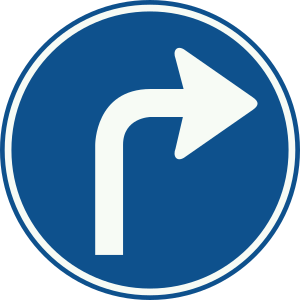 D5 Compulsory direction Only the direction of the arrow is allowed here; any other way is not.
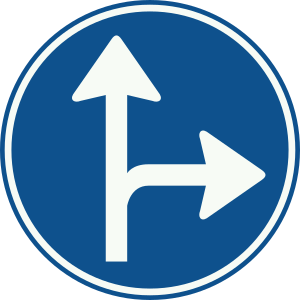 D6 Compulsory directions (choose one) You must take one of the directions shown, for example straight on or right.
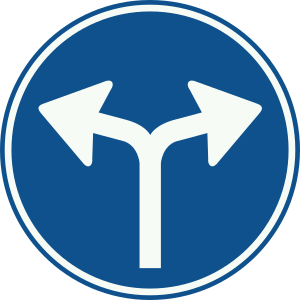 D7 Compulsory directions: left or right You must turn left or right here: going straight on is not allowed.
E Stopping & parking 16 signs
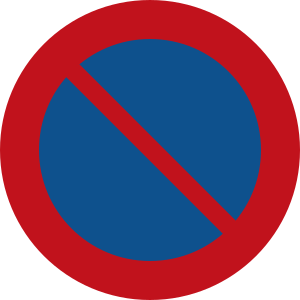 E1 No parking You may not park on this side of the road.
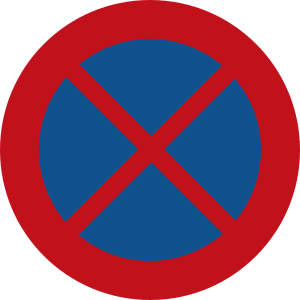 E2 No stopping You may not stop your vehicle here, not even for a moment.
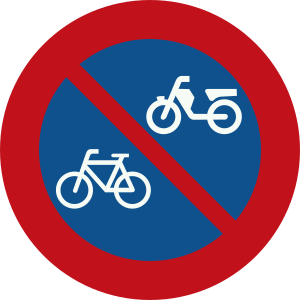 E3 No parking for bicycles and mopeds You may not leave bicycles or mopeds here.
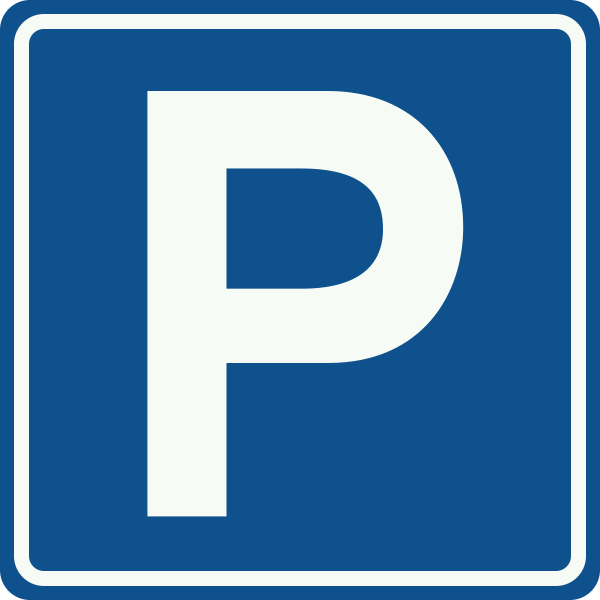 E4 Parking You may park here.
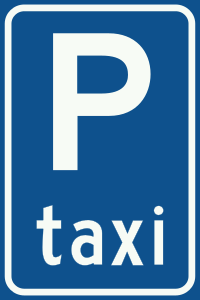 E5 Taxi rank This place is for taxis waiting for passengers.
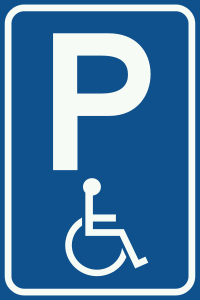 E6 Disabled parking Only vehicles with a valid disabled parking card clearly on display may park here.
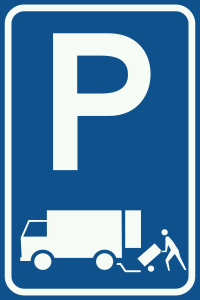 E7 Loading and unloading place This place is only for loading and unloading goods straight away.
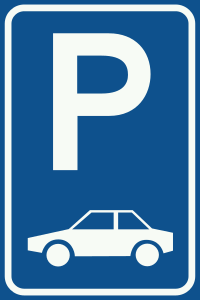 E8 Parking only for the vehicle type shown Only the type of vehicle shown on the sign may park here.
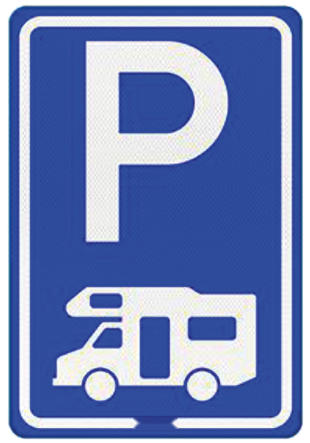 E8a Parking for motorhomes only Only motorhomes may park here.
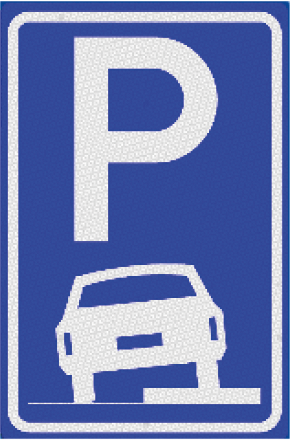 E8b Parking with two wheels on the pavement Here you may park with two wheels on the pavement.
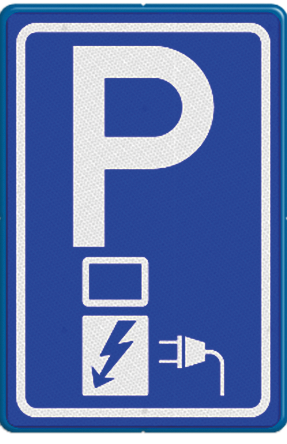 E8c Parking only for charging electric vehicles These spaces are only for electric vehicles while they are charging.
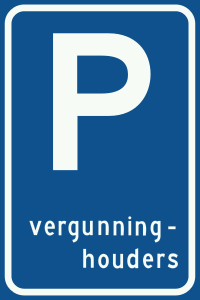 E9 Parking for permit holders only Only holders of a parking permit for this area may park here.
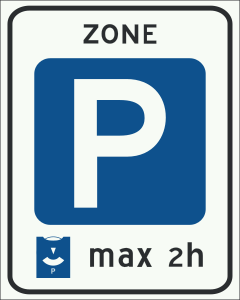 E10 Parking disc zone You are entering a parking disc zone (blue zone), where parking time is limited.
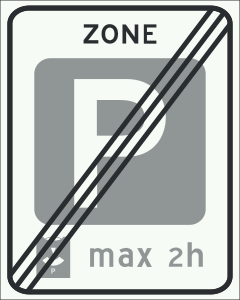 E11 End of parking disc zone The parking disc zone (blue zone) ends here.
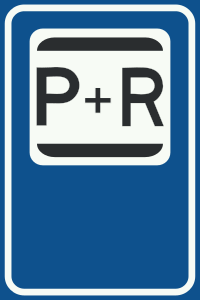 E12 Park and ride (P+R) Parking for people who switch to public transport here.
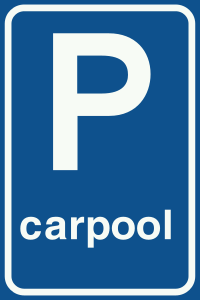 E13 Carpool parking Parking for people who leave their car here to share a ride.
F Other rules 22 signs
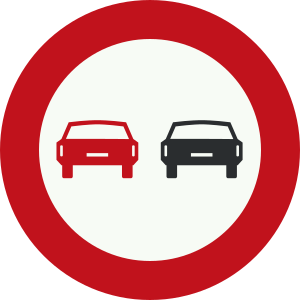 F1 No overtaking for motor vehicles Motor vehicles may not overtake each other here.
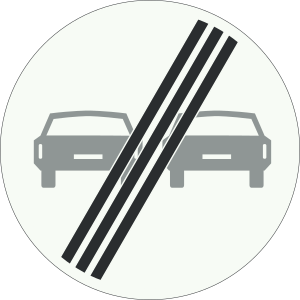 F2 End of no overtaking The ban on motor vehicles overtaking each other ends here.
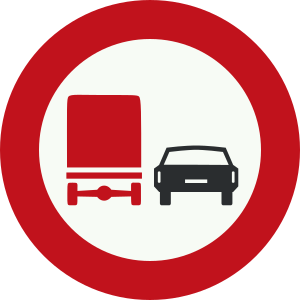 F3 No overtaking for trucks Trucks may not overtake other motor vehicles here.
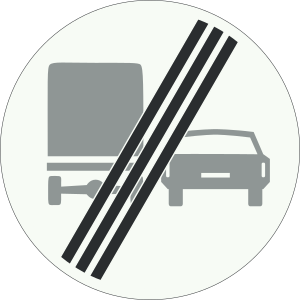 F4 End of no overtaking for trucks The ban on trucks overtaking motor vehicles ends here.
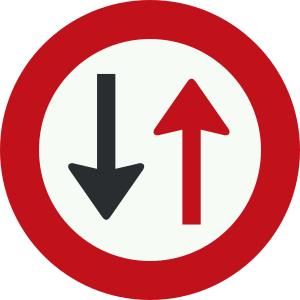 F5 Oncoming traffic has priority At the narrow stretch ahead, traffic coming towards you goes first.
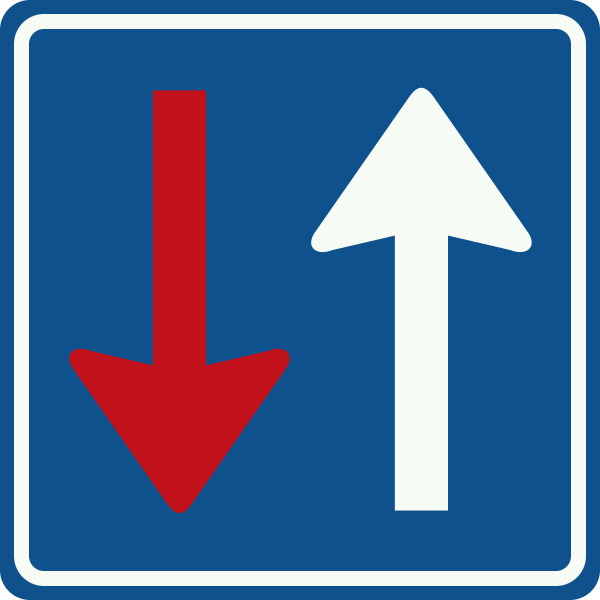 F6 You have priority over oncoming traffic At the narrow stretch ahead, you go first and oncoming traffic must wait.
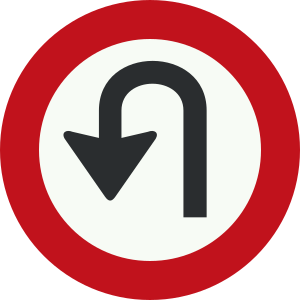 F7 No U-turns You may not turn round here to drive back the way you came.
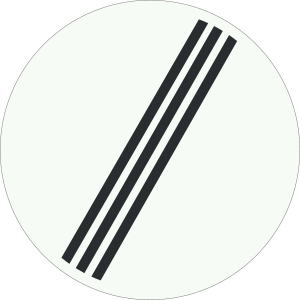 F8 End of all restrictions shown by signs All the bans set by earlier signs end here.
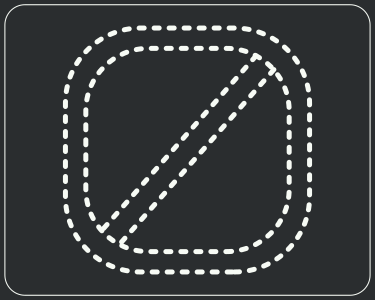 F9 End of all restrictions on electronic signs All the bans shown earlier on electronic signs above the road end here.
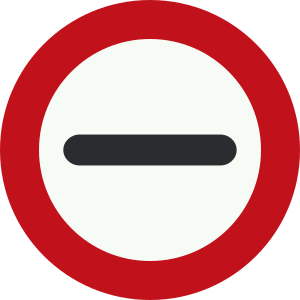 F10 Stop You must stop. The sign can show who is stopping you, such as the police or customs.
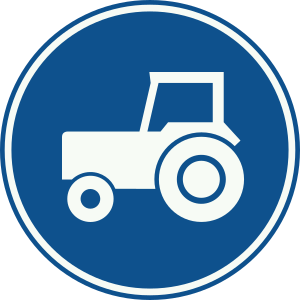 F11 Passing lane compulsory for tractors and slow vehicles Tractors, limited-speed motor vehicles and mobile machines must use the passing road or lane shown.
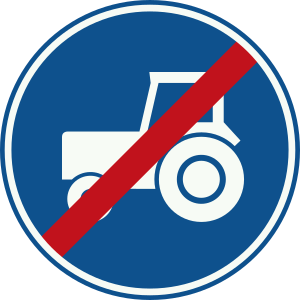 F12 End of compulsory passing lane Tractors and slow vehicles no longer have to use the passing road or lane.
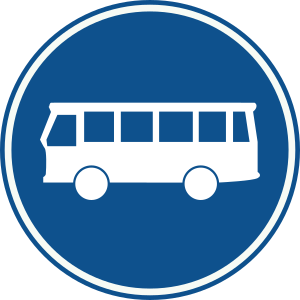 F13 Bus lane Only line buses, the buses on a public transport route, may use this road or lane.
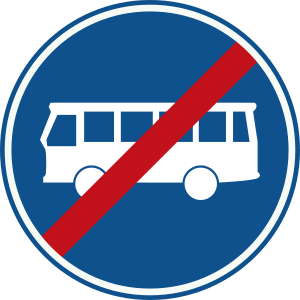 F14 End of bus lane The road or lane for line buses ends here.
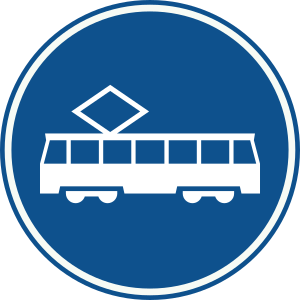 F15 Tram lane Only trams may use this road or lane.
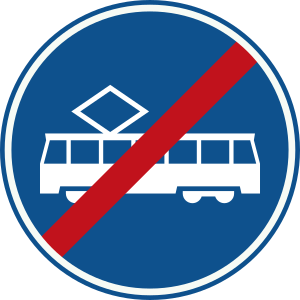 F16 End of tram lane The road or lane for trams ends here.
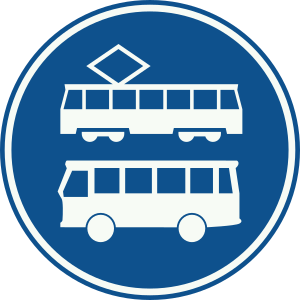 F17 Bus and tram lane Only line buses and trams may use this road or lane.
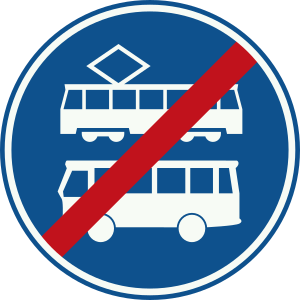 F18 End of bus and tram lane The road or lane for line buses and trams ends here.
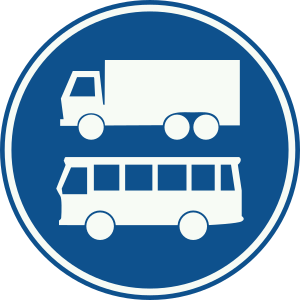 F19 Lane for trucks and buses Only trucks and line buses may use this road or lane.
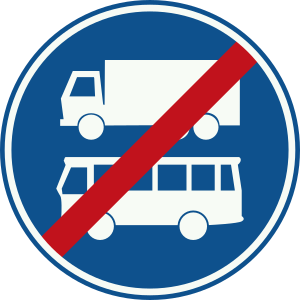 F20 End of lane for trucks and buses The road or lane for trucks and line buses ends here.
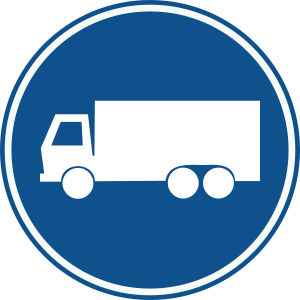 F21 Truck lane Only trucks may use this road or lane.
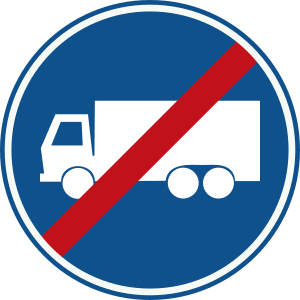 F22 End of truck lane The road or lane for trucks ends here.
G Traffic rules 16 signs
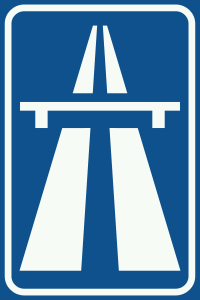 G1 Motorway From here the motorway rules apply: only motor vehicles that can and may go at least 60 km/h are allowed.
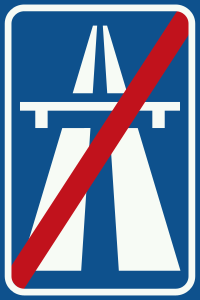 G2 End of motorway The motorway ends here.
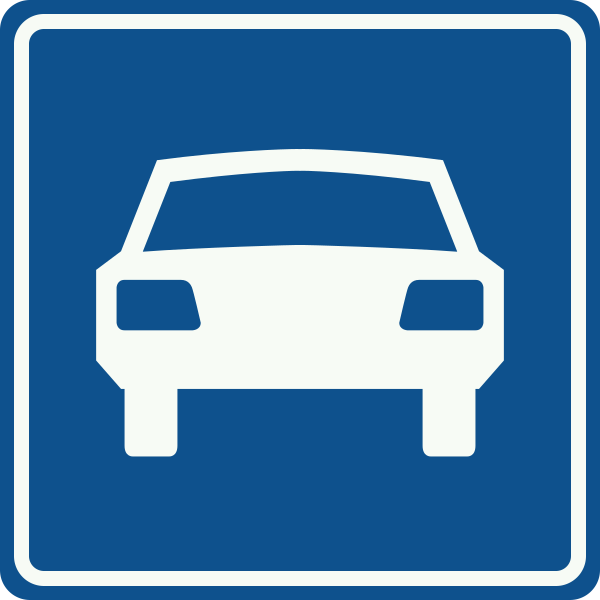 G3 Expressway (autoweg) From here the expressway rules apply: only motor vehicles that can and may go at least 50 km/h are allowed.
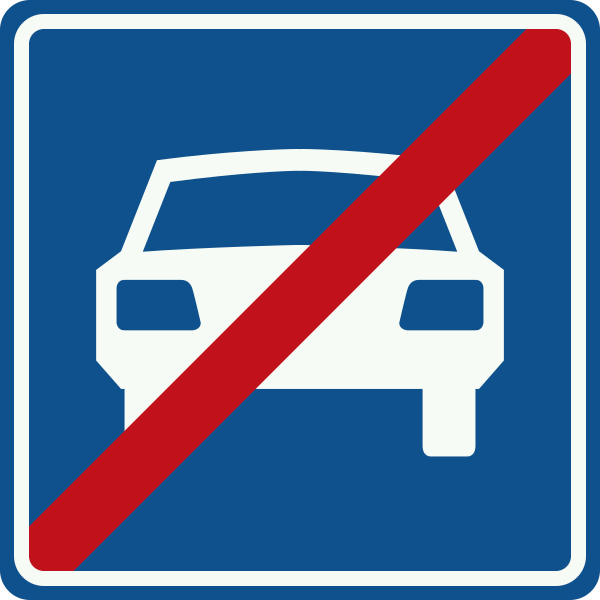 G4 End of expressway The expressway (autoweg) ends here.
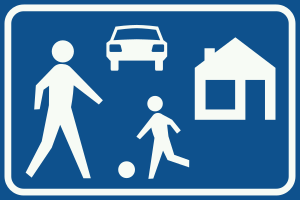 G5 Residential zone (erf) You are entering a residential zone, where pedestrians may use the full width of the road.
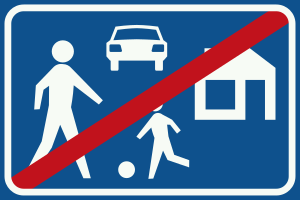 G6 End of residential zone (erf) The residential zone ends here.
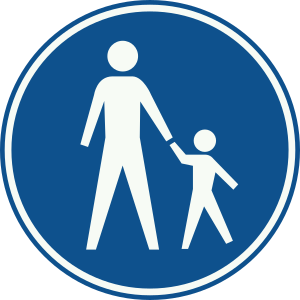 G7 Footpath This path is meant only for people on foot.
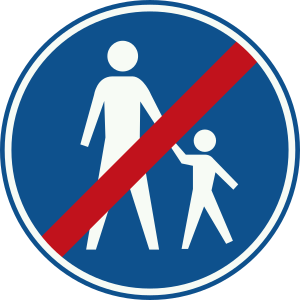 G8 End of footpath The footpath ends here.
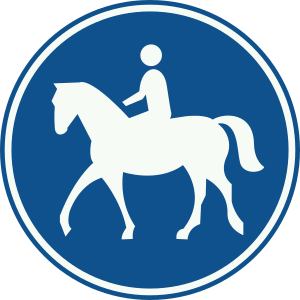 G9 Bridle path This path is meant for people on horseback.
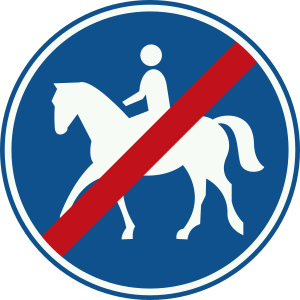 G10 End of bridle path The bridle path ends here.
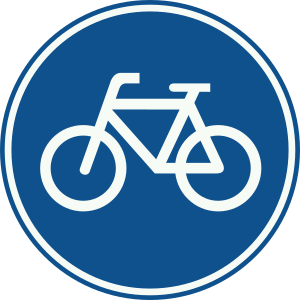 G11 Compulsory cycle path Cyclists and light-moped riders must use this cycle path.
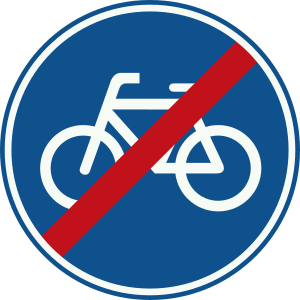 G12 End of compulsory cycle path The compulsory cycle path ends here.
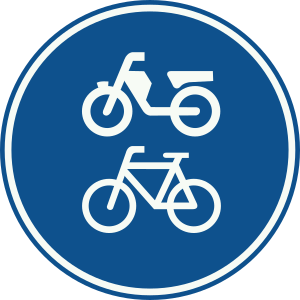 G12a Cycle and moped path Cyclists, light-moped riders and moped riders must use this path.
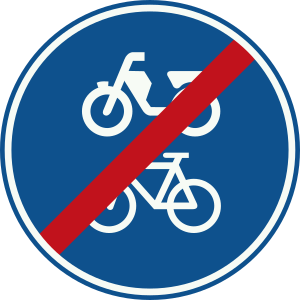 G12b End of cycle and moped path The cycle and moped path ends here.
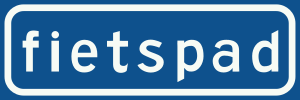 G13 Optional cycle path Cyclists may use this path, but they do not have to.
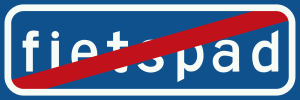 G14 End of optional cycle path The optional cycle path ends here.
H Built-up area 2 signs
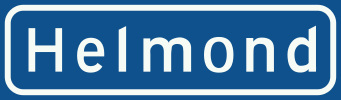
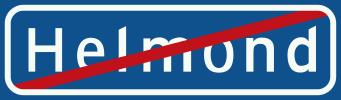
J Warnings 39 signs
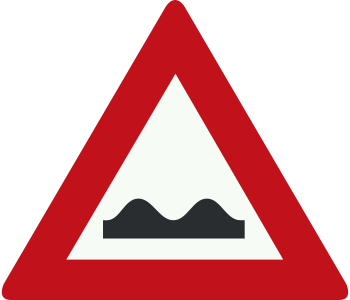 J1 Uneven road surface Warning: the road surface ahead is in poor condition.
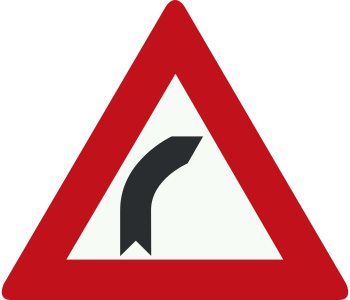 J2 Bend to the right Warning: a bend to the right is coming.
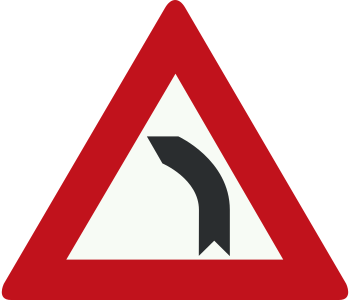 J3 Bend to the left Warning: a bend to the left is coming.
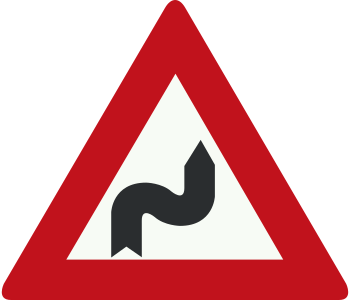 J4 Double bend, first to the right Warning: two bends follow each other closely, the first one to the right.
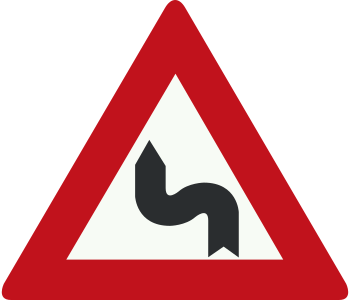 J5 Double bend, first to the left Warning: two or more bends are coming, the first one to the left.
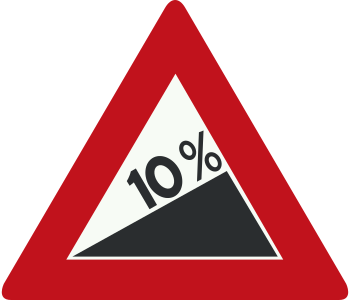 J6 Steep hill upwards Warning: a steep climb is coming.
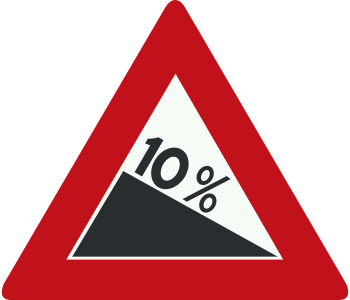 J7 Steep hill downwards Warning: a steep descent is coming.
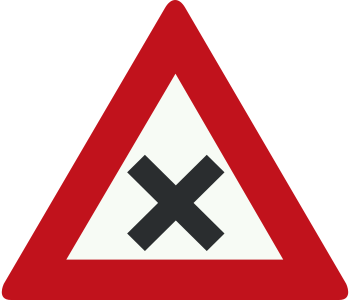 J8 Dangerous junction Warning: a dangerous junction is coming.
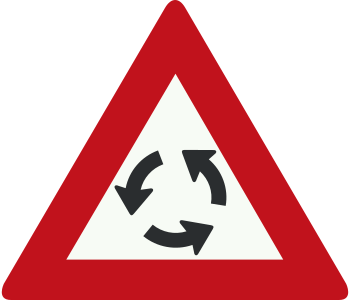 J9 Roundabout ahead Warning: a roundabout is coming.
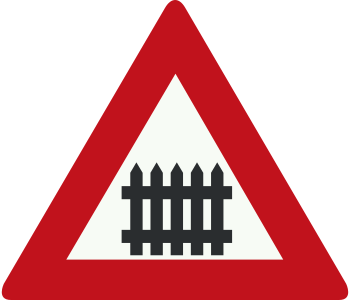 J10 Level crossing with barriers Warning: a level crossing with barriers is ahead.
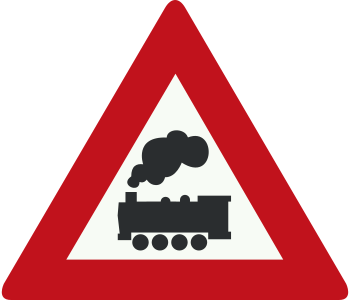 J11 Level crossing without barriers Warning: a level crossing without barriers is ahead.
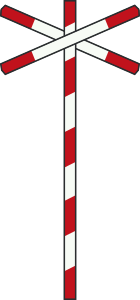 J12 Level crossing, single track This cross marks the level crossing itself, here with a single track.
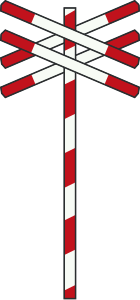 J13 Level crossing, two or more tracks This double cross marks the level crossing itself, with two or more tracks.
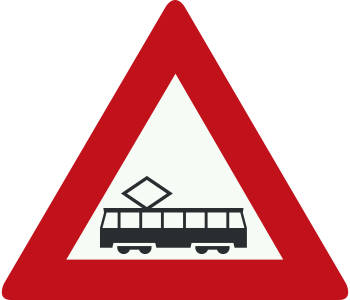 J14 Tram crossing Warning: trams cross or use the road ahead.
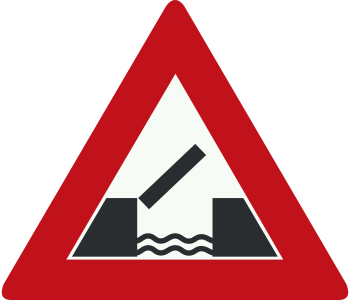 J15 Movable bridge Warning: a bridge that can open is coming.
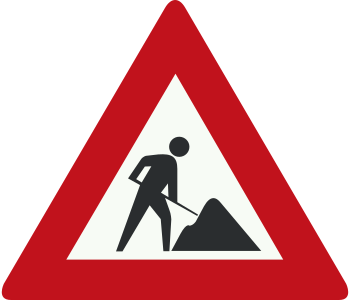 J16 Road works Warning: there are road works ahead.
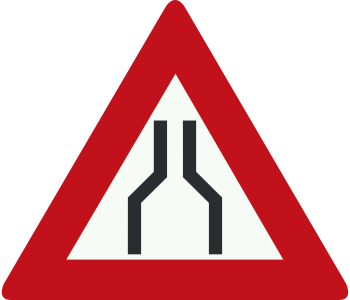 J17 Road narrows Warning: the road gets narrower on both sides.
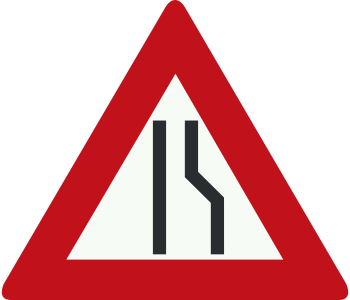 J18 Road narrows on the right Warning: the road gets narrower on the right.
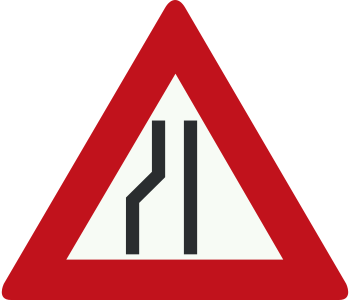 J19 Road narrows on the left Warning: the road gets narrower on the left.
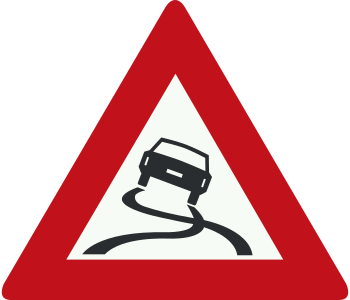 J20 Slippery road Warning: the road ahead can be slippery.
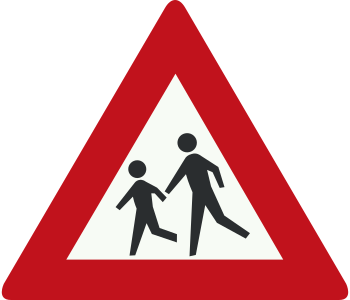 J21 Children Warning: children may be on or near the road, for example near a school or playground.
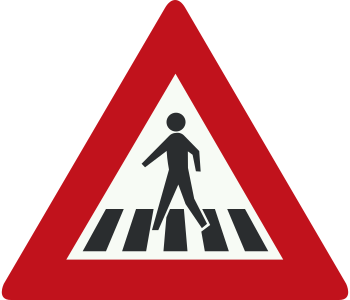 J22 Pedestrian crossing ahead Warning: a pedestrian crossing (zebra) is coming.
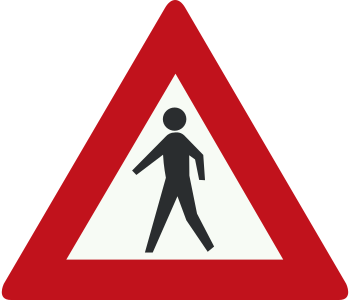 J23 Pedestrians Warning: pedestrians may be on or crossing the road ahead.
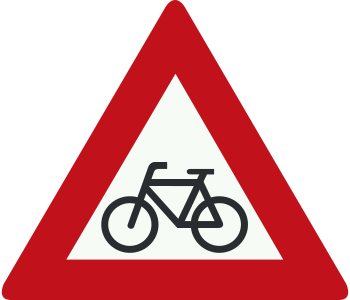 J24 Cyclists and moped riders Warning: cyclists and moped riders may cross or join the road ahead.
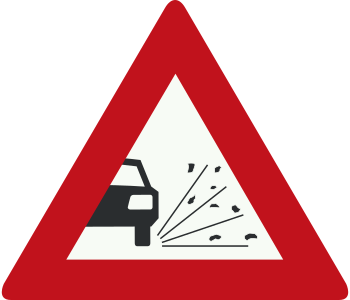 J25 Loose chippings Warning: there may be loose stones on the road ahead.
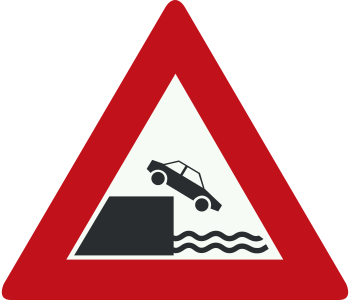 J26 Quayside or river bank Warning: the road runs along or ends at water.
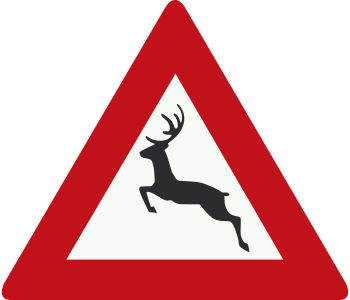 J27 Large wild animals Warning: large wild animals, such as deer, may cross the road.
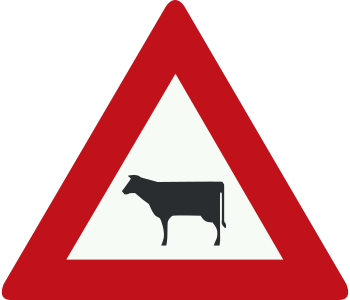 J28 Livestock Warning: farm animals may be on the road.
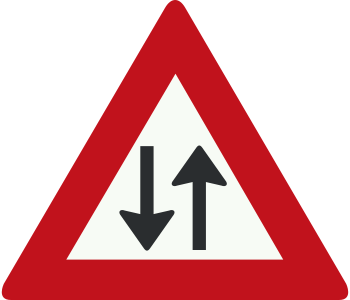 J29 Two-way traffic Warning: from here traffic comes towards you on the same road.
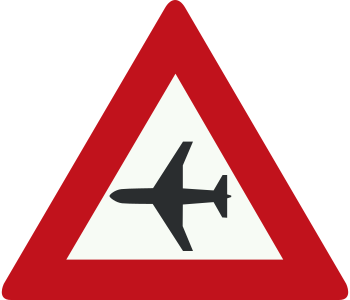 J30 Low-flying aircraft Warning: aircraft may fly low over the road, often near an airfield.
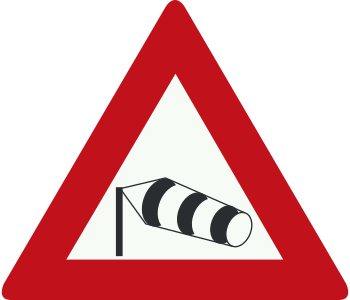 J31 Crosswind Warning: strong side winds can blow across the road here.
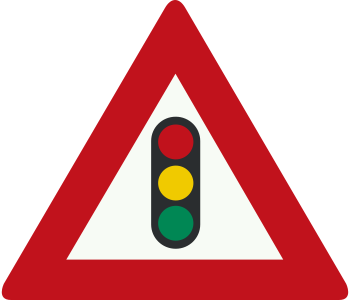 J32 Traffic lights ahead Warning: traffic lights are coming.
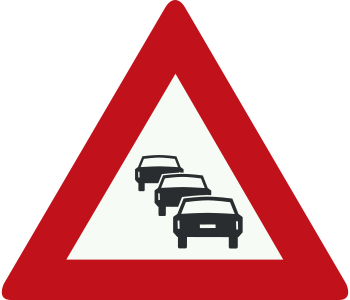 J33 Queue ahead Warning: there may be a traffic queue ahead.
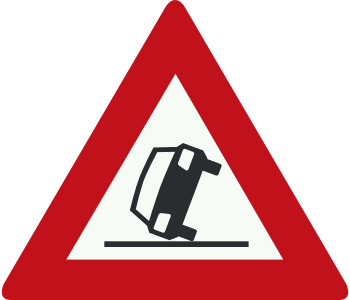 J34 Accident Warning: there has been an accident further on.
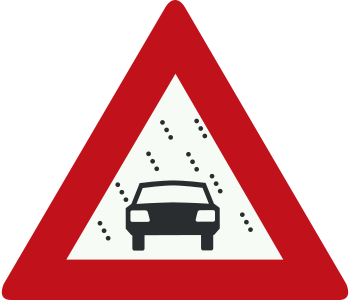 J35 Poor visibility from snow, rain or fog Warning: snow, rain or fog can make it hard to see here.
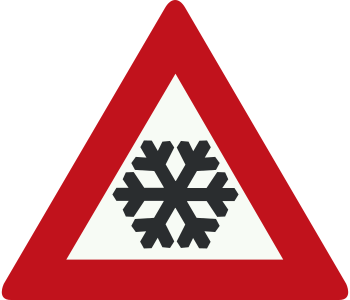 J36 Ice or snow Warning: the road can be icy or covered with snow.
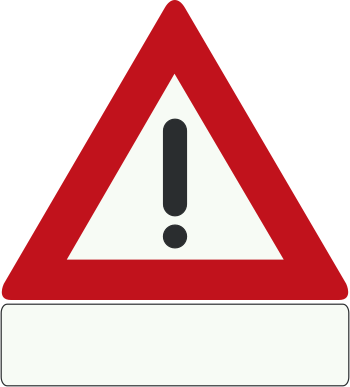 J37 Danger Warning: a danger ahead, explained on the sub-sign.
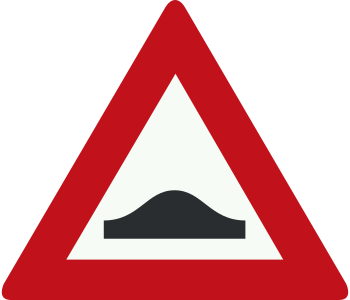 J38 Speed hump Warning: a speed hump is coming.
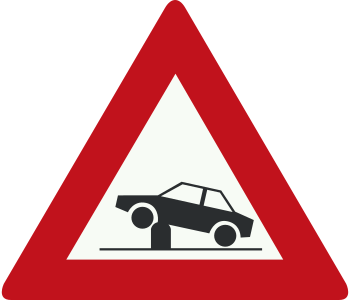 J39 Retractable bollard in the road Warning: an electric bollard that rises and lowers stands in the road ahead.
K Signposts 14 signs
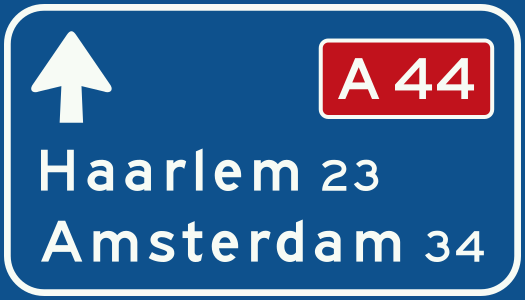 K1 Motorway direction sign at the split Shows the destinations and road numbers for each direction where the motorway splits or an exit leaves.
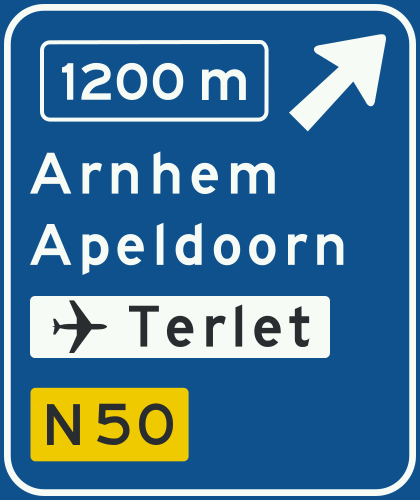 K2 Advance sign for a motorway exit Shows the destinations and the distance to the next motorway exit.
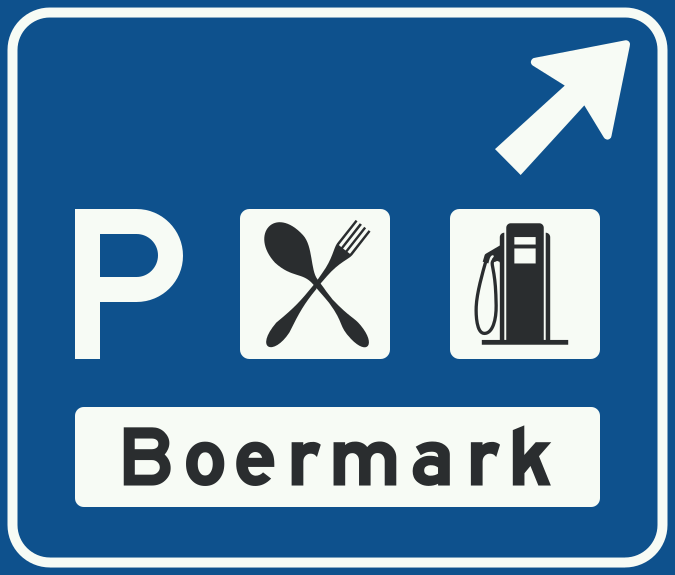 K3 Sign to a service area Shows a service area ahead and what you will find there, such as parking, food or fuel.
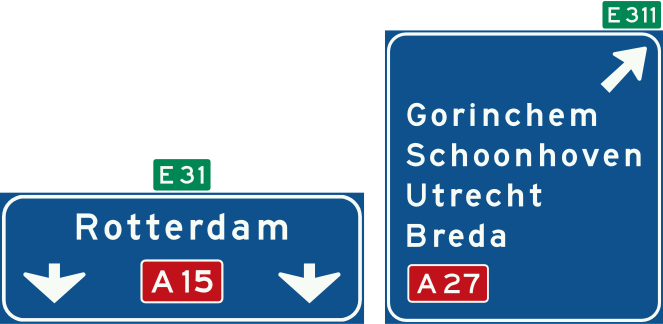 K4 Overhead direction sign with lane panels Signs above the lanes show which lane leads to which destination.
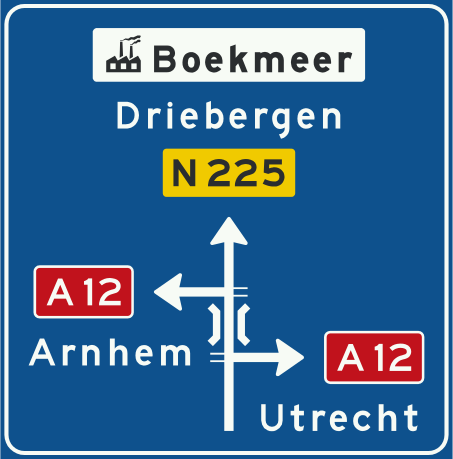 K5 Advance direction sign on other roads Shows the destinations ahead before a junction on a road that is not a motorway.
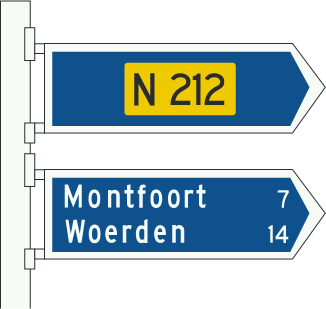 K6 Direction sign at the junction on other roads Shows at the junction itself which way each destination lies.
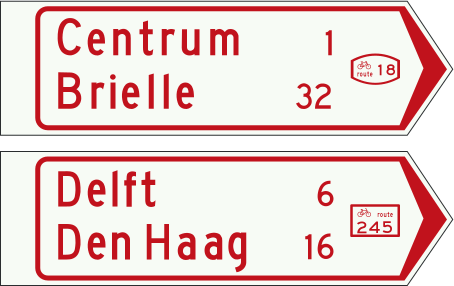 K7 Fingerpost for cyclists and moped riders Shows cyclists and moped riders the way and the distance to destinations.
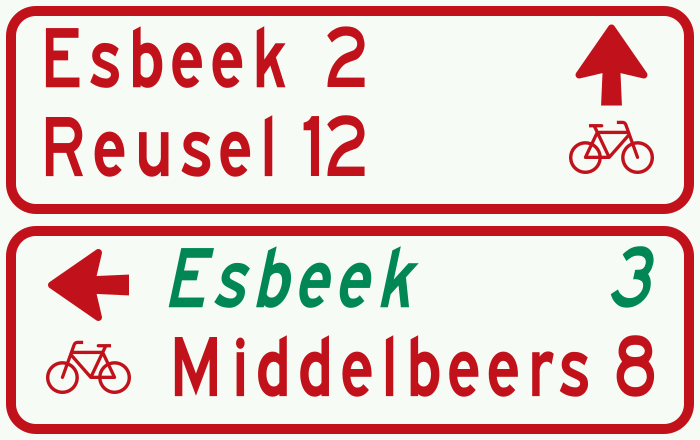 K8 Stacked direction sign for cyclists and moped riders Shows cyclists and moped riders several destinations and directions on one sign.
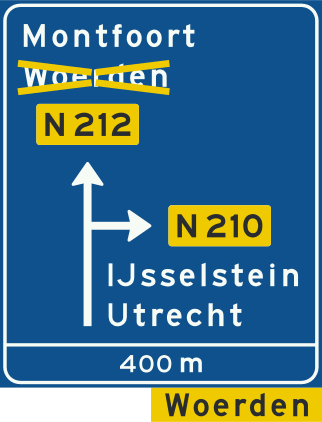 K9 Diversion Shows the diversion route around a road that is closed.
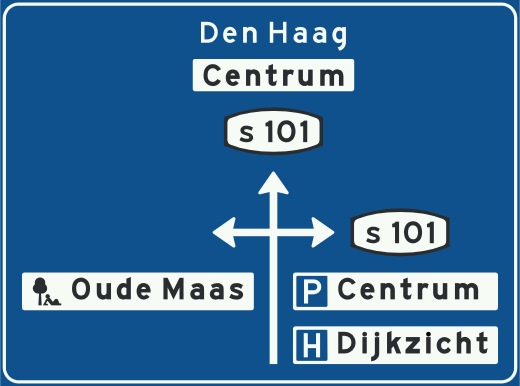 K10 Advance direction sign in a built-up area Shows the destinations ahead before a junction in a built-up area.
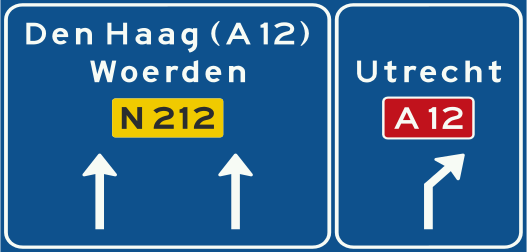 K11 Lane selection sign on other roads Shows which lane to take for each destination at the next junction.
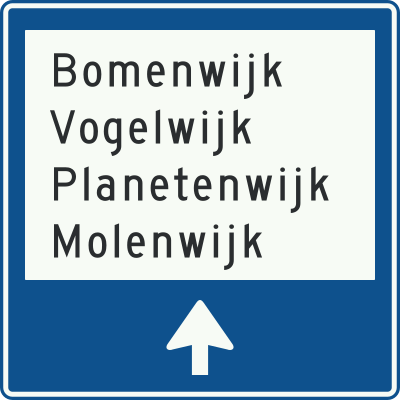 K12 District direction sign Shows the way to districts or neighbourhoods in a town.
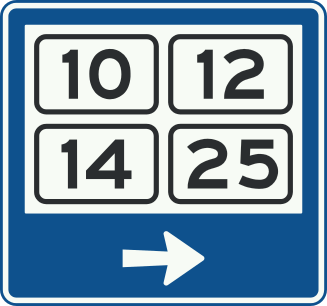 K13 District direction sign (numbers) Shows the way to districts in a town by their numbers.
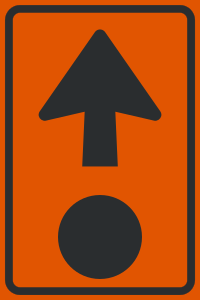 K14 Dangerous goods route Shows the route for vehicles carrying dangerous goods.
L Information 21 signs
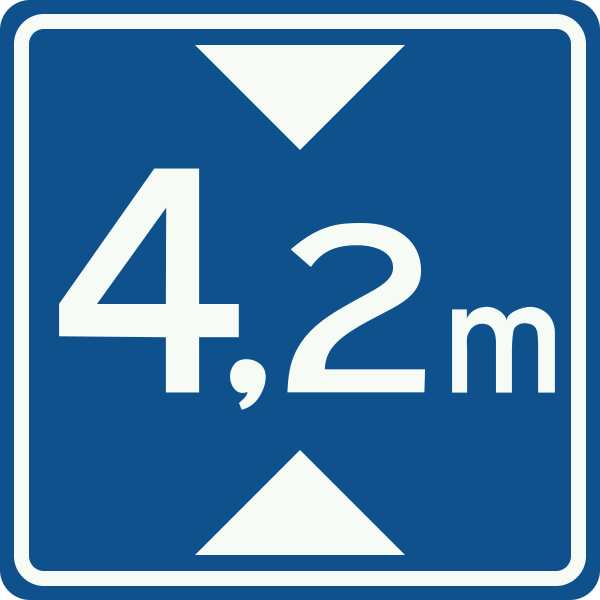 L1 Clearance height Shows the free height under the bridge or underpass ahead.
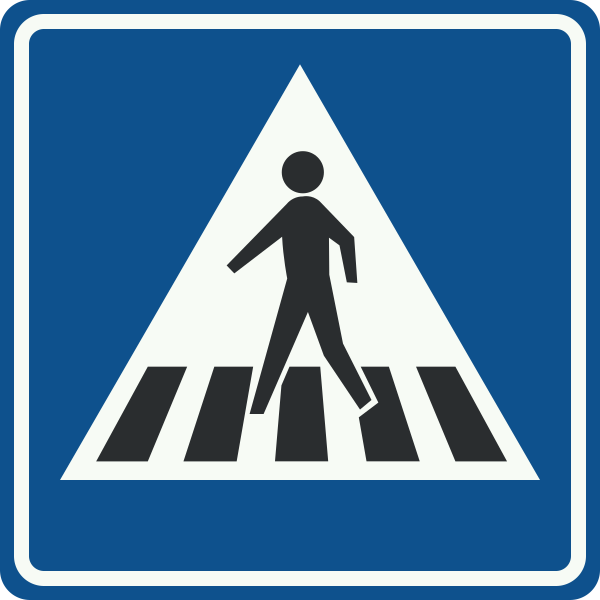 L2 Pedestrian crossing (zebra) Pedestrians cross here on the zebra stripes.
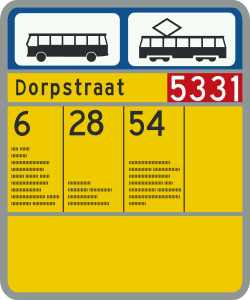 L3 Bus or tram stop Buses or trams stop here to let passengers on and off.
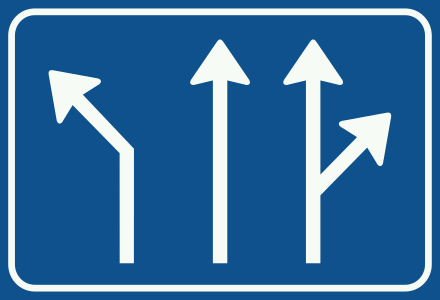 L4 Lane selection Shows which lane to use for each direction at the next junction.
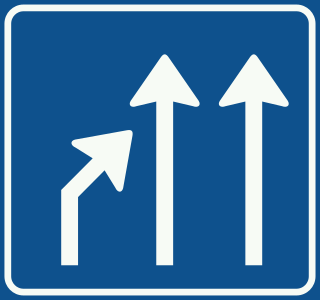 L5 Lane ends The lane shown ends ahead, so traffic in it has to move over.
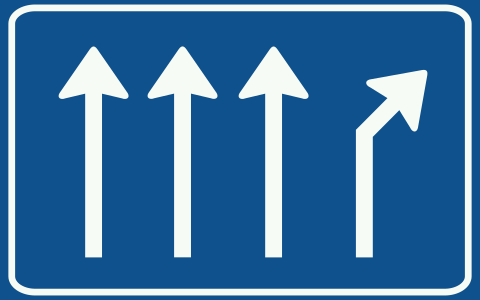 L6 Road splits Shows how the lanes divide where the road splits ahead.
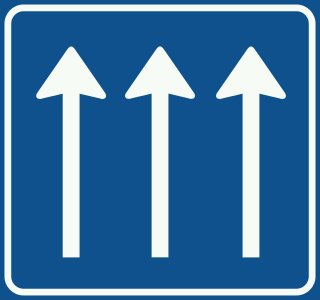 L7 Number of through lanes Shows how many lanes continue straight on.
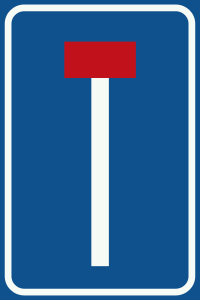 L8 Dead end This road does not lead through: it ends further on.
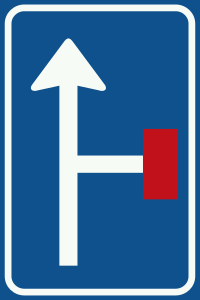 L9 Dead end ahead The road in the direction shown is a dead end.
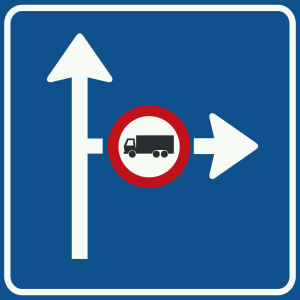 L10 Advance notice of a traffic measure Shows a measure, such as a ban, that applies in the direction shown further on.
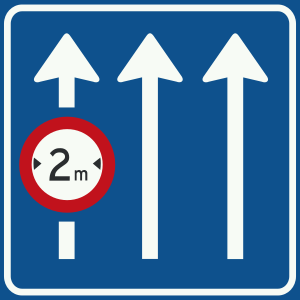 L11 Sign applies to the lanes shown The sign drawn on it only applies to the lane or lanes it shows.
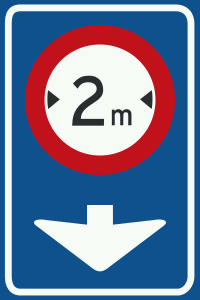 L12 Sign applies to this lane The sign on it only applies to the lane the arrow points to.
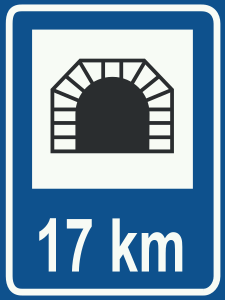 L13 Road tunnel A road tunnel starts here.
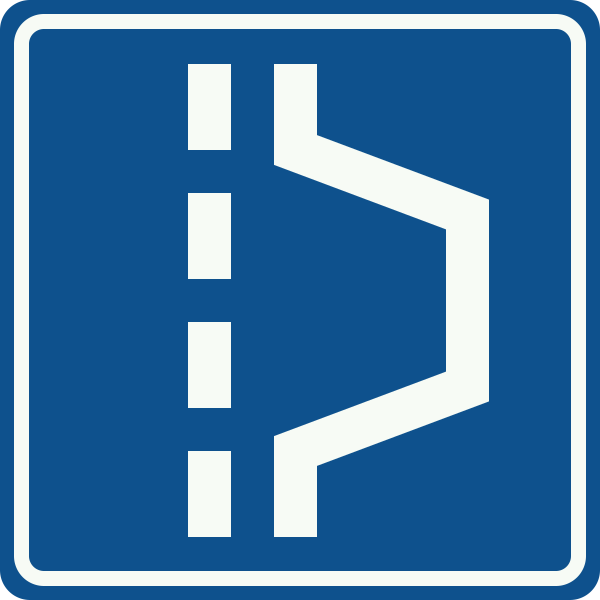 L14 Emergency lay-by There is an emergency lay-by here.
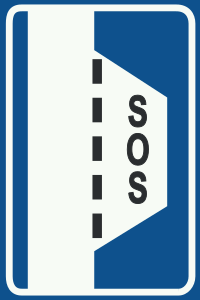 L15 Emergency lay-by with phone and fire extinguisher There is an emergency lay-by here with an emergency phone and a fire extinguisher.
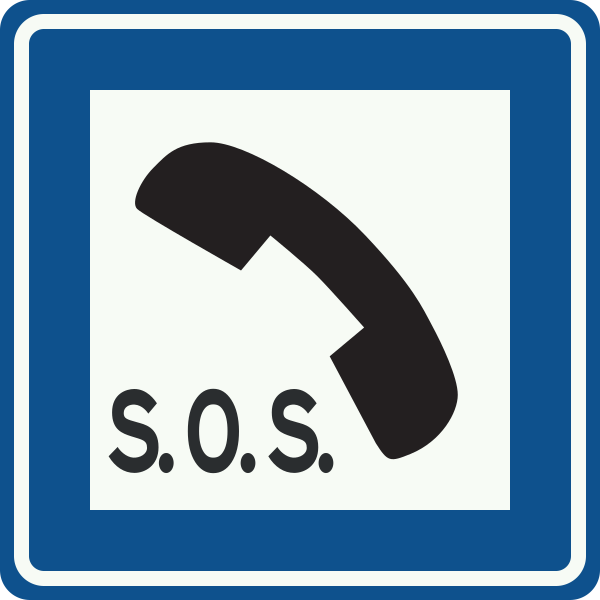 L16 Emergency phone There is an emergency phone here.
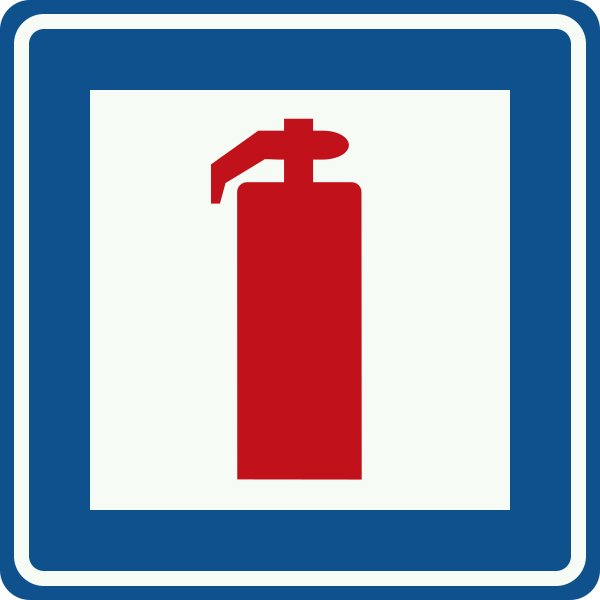 L17 Fire extinguisher There is a fire extinguisher here.
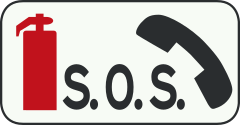 L18 Emergency phone and fire extinguisher There is an emergency phone and a fire extinguisher here.
- L19 L19 Nearest emergency exit Shows the direction and distance to the nearest emergency exit, for example in a tunnel.
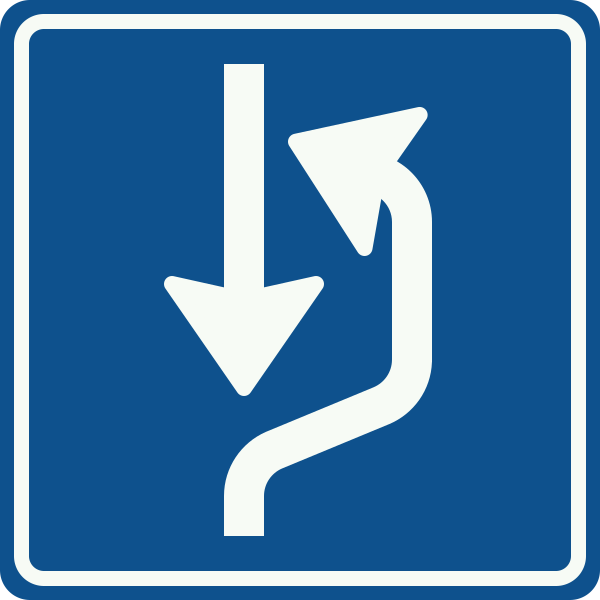 L20 Passing place on the right There is a passing place on the right of the road.
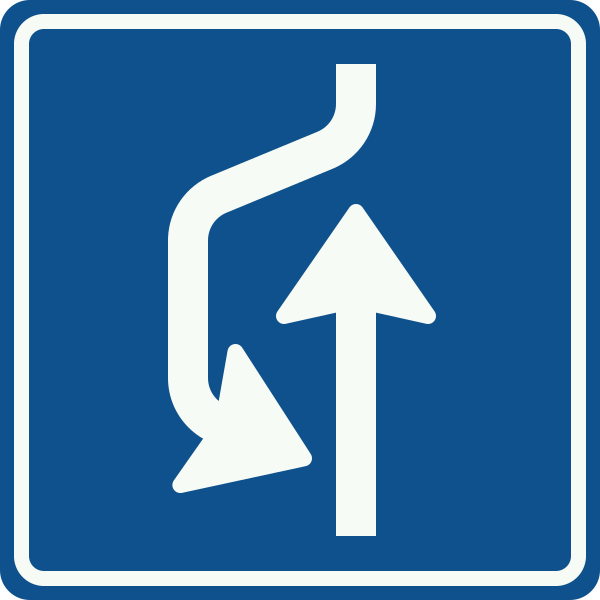 L21 Passing place on the left There is a passing place on the left of the road.
Frequently asked questions
How many road signs are there in the Netherlands?
Appendix 1 of the RVV 1990 traffic code lists about 180 signs, grouped by letter from A (speed) to L (information).
What do the letters A to L on Dutch road signs mean?
Each letter is a group: A speed, B priority, C prohibitions, D direction, E stopping and parking, F other rules, G traffic rules for special roads and areas, H built-up area, J warnings, K signposts and L information.
Do I need to know every road sign for the CBR theory exam?
Traffic signs are one of the eight exam topics, and questions can use any sign from the traffic code, so it pays to know them all, especially the priority and prohibition signs.
Official artwork and codes: RVV 1990, appendix 1 (public domain).